A platform tailored to Jewish life
Everything Kikaron offers, plus a special package designed for synagogues, Jewish associations, and study groups.
Every standard Kikaron app, included
You also get the full standard suite: Library for the shared library and team spaces, Contacts for members and staff, Meetings for video calls, and the rest.
Your minhag, chosen
A hub says whether it keeps the Orthodox or the progressive custom, and that one choice follows through: which days are marked, how the times are reckoned, and what the pages of the festivals say.
Hosted in Europe, governed by EU privacy law
The same European hosting and member-data protection that applies to every Kikaron environment — your community's data stays in Europe, on EU-governed infrastructure.
A holiday-aware calendar
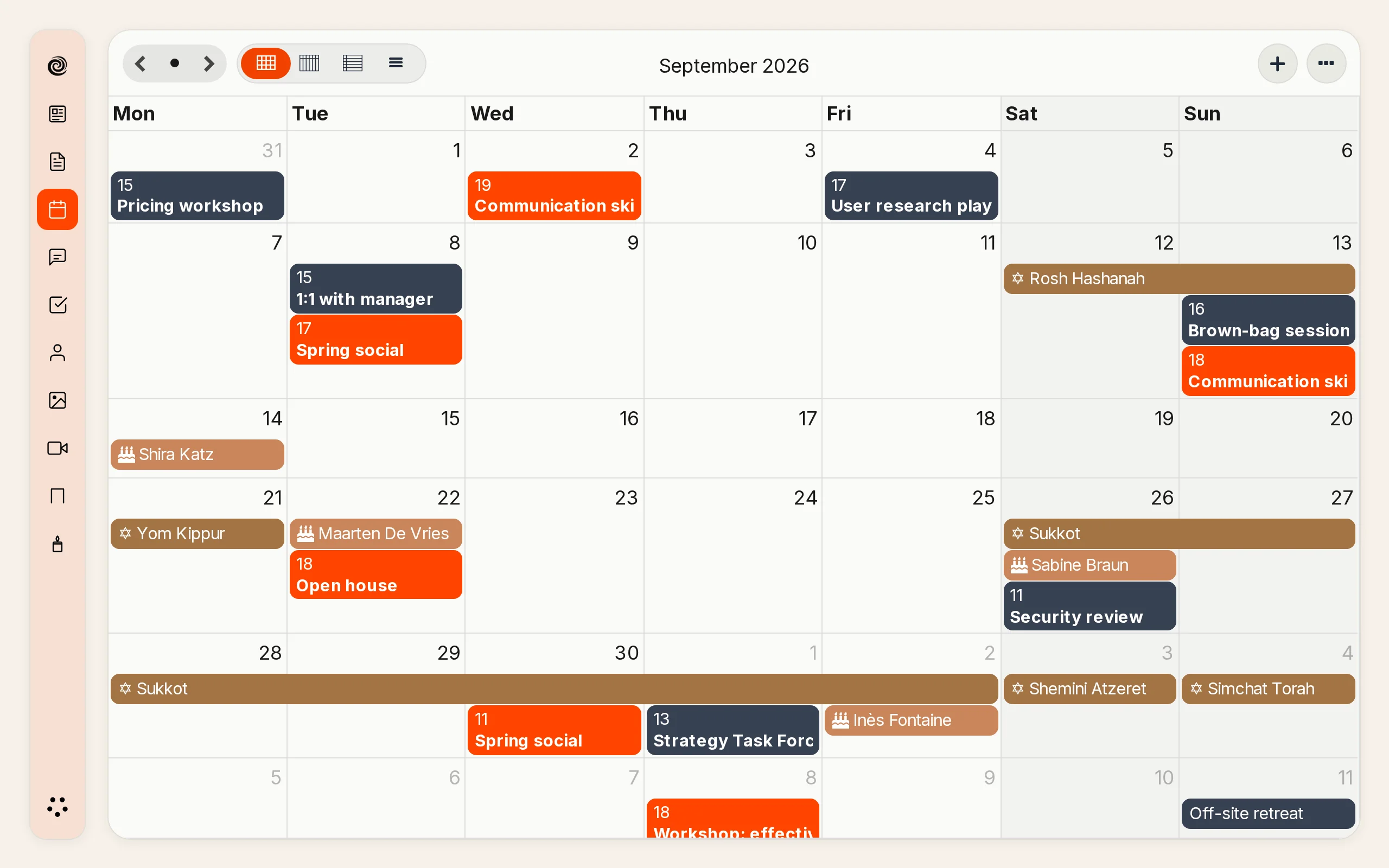
Every Jewish holiday — major and minor — is already on the calendar, with Hebrew dates, candle-lighting and havdalah times where they apply, and the multi-day spans of Sukkot, Pesach, and Shavuot drawn across the days they actually fall on.
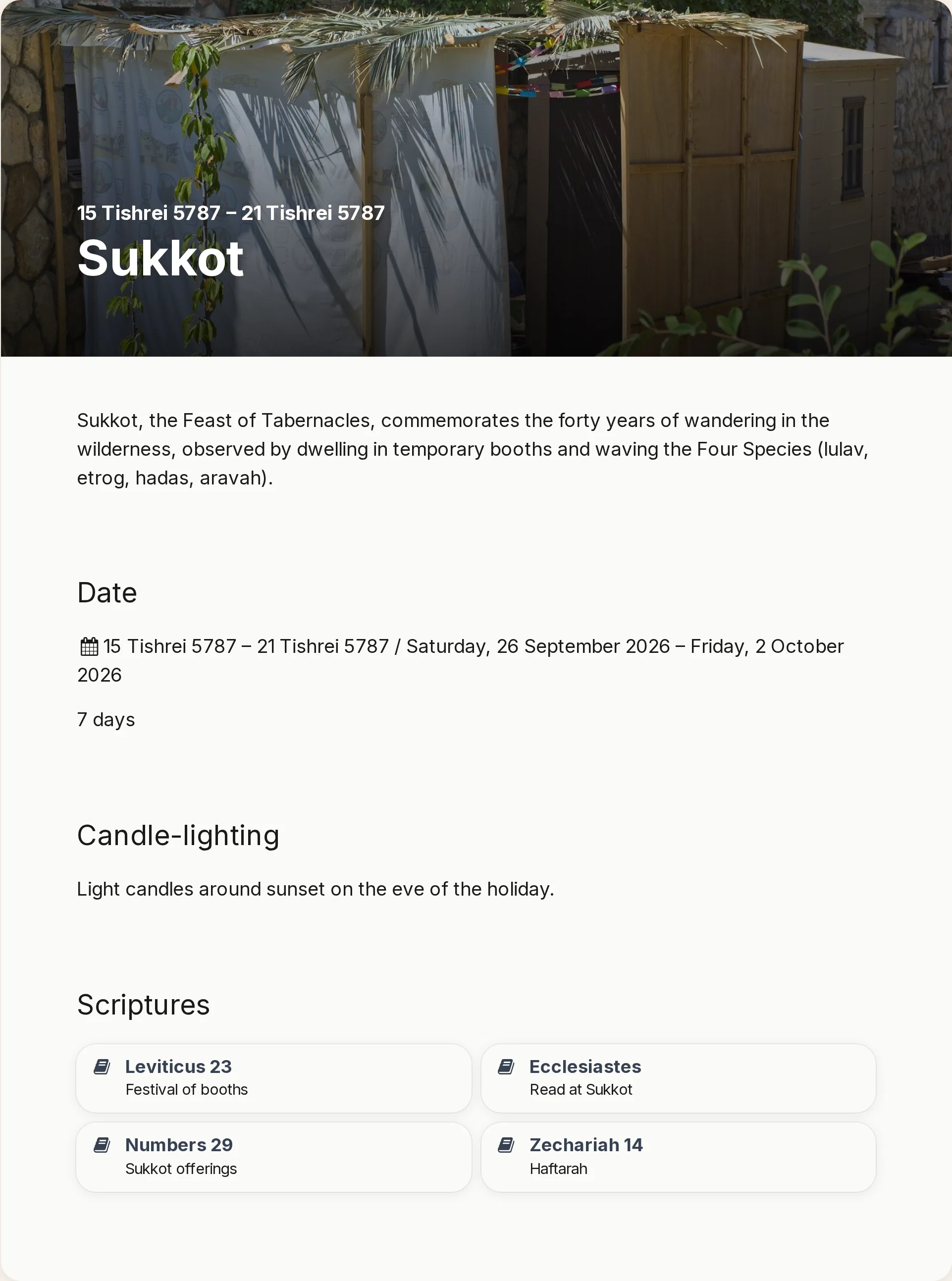
Click any holiday and members land on a pre-populated detail page — a short explanation of the day, its customs, the prayers and Torah readings that belong to it, an illustration drawn from the public-domain collections of the great museums, and direct links into the Chokhmah library so they can open the actual Tanakh, Mishnah, and Talmud passages that frame it.
The Chokhmah library
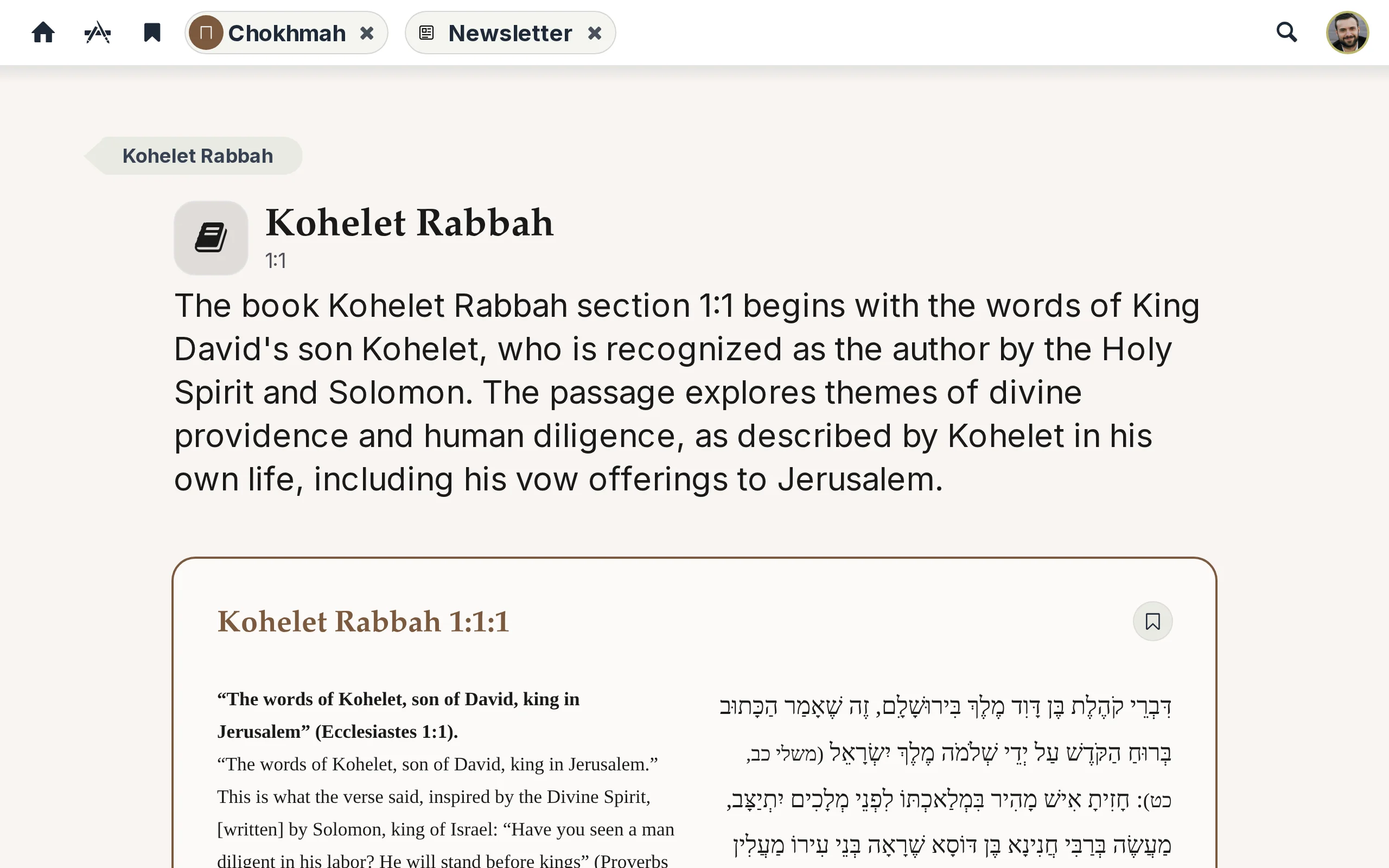
Tanakh, Mishnah, Talmud, Midrash and the commentators, each collection a shelf of its own. Every passage reads with the Hebrew or Aramaic beside the English, verse by verse — open a midrash, favourite the lines you keep returning to, and cite passages straight into your team-space documents and the community newsletter.
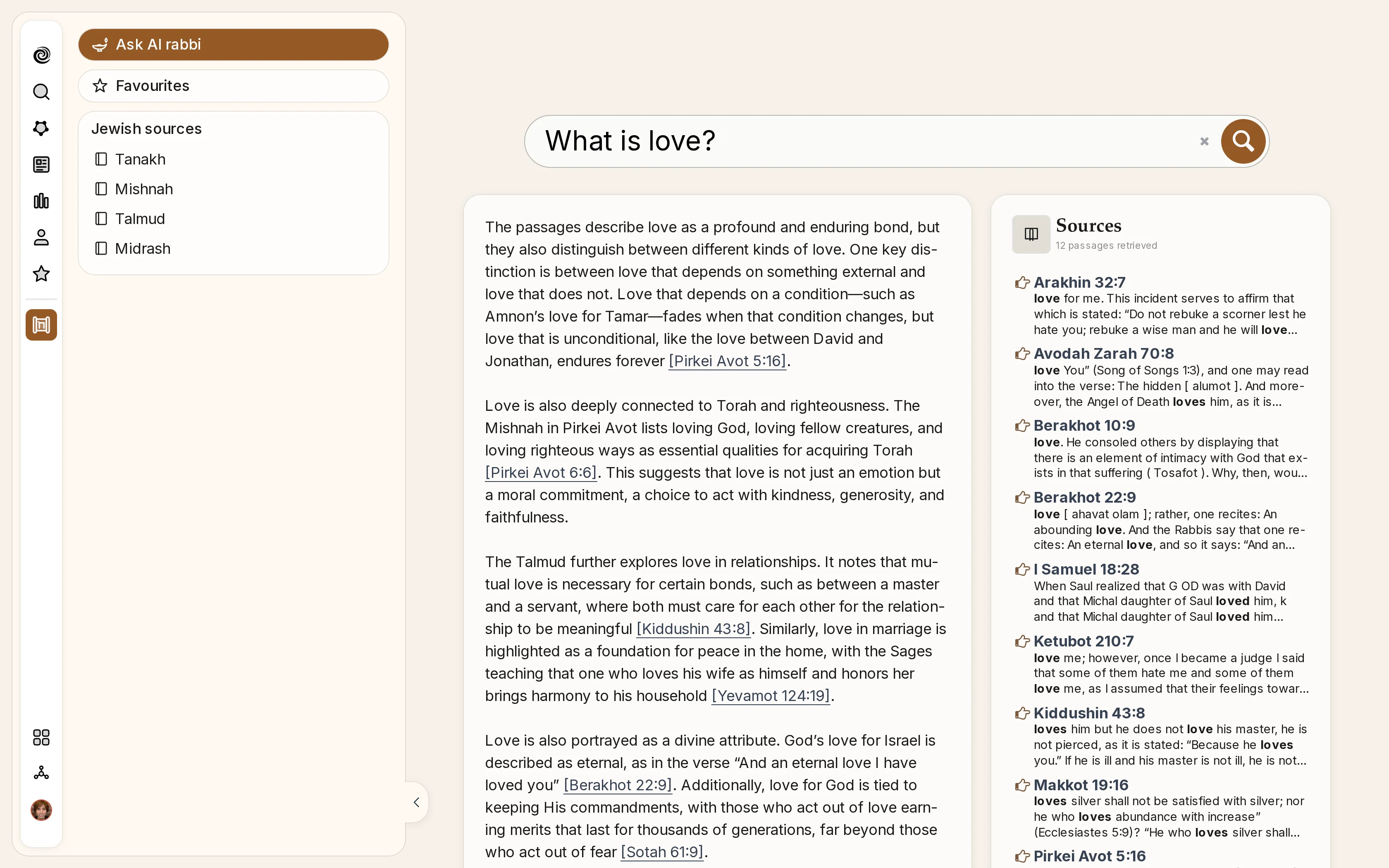
And you can simply ask. The answer is written from the passages it cites, and every citation opens the text itself — so the sources are there to be checked, which is the point.
Where the d'var Torah gets written
Every member also gets a free Kikaron One account — a personal cloud of their own, with the Notes app in it. Notes is where the long things get written: a d'var Torah, a shiur, an essay for the newsletter, a whole book if it comes to that.
Because the community carries the package, the library comes with them. Search Chokhmah, favourite the lines you keep returning to, and drop a passage straight into the text you are writing.
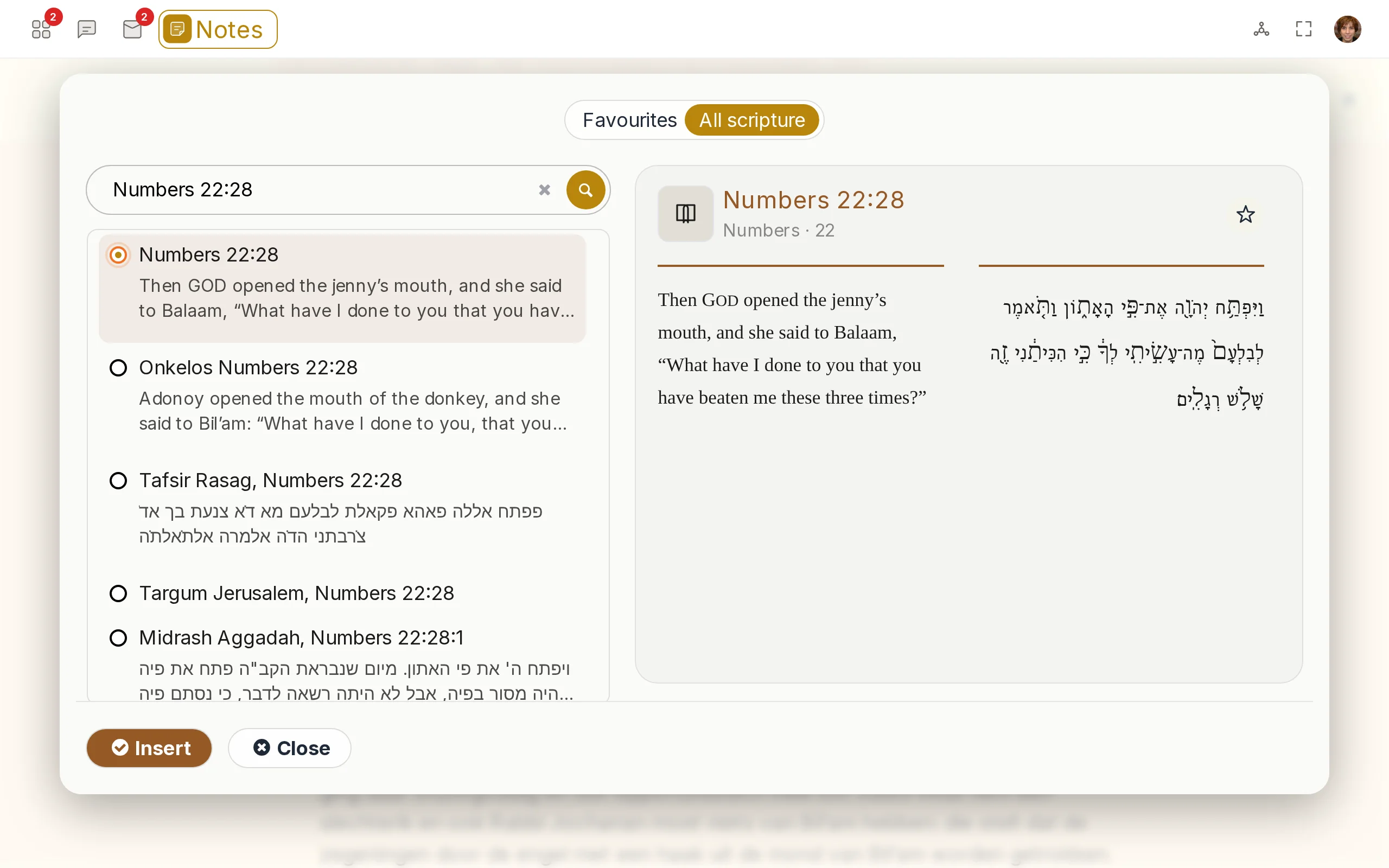
What lands in the text is a live fragment — the Hebrew beside the translation, with the way back to the source still attached — not a quotation that has been pasted out of its context and cannot find its way home.
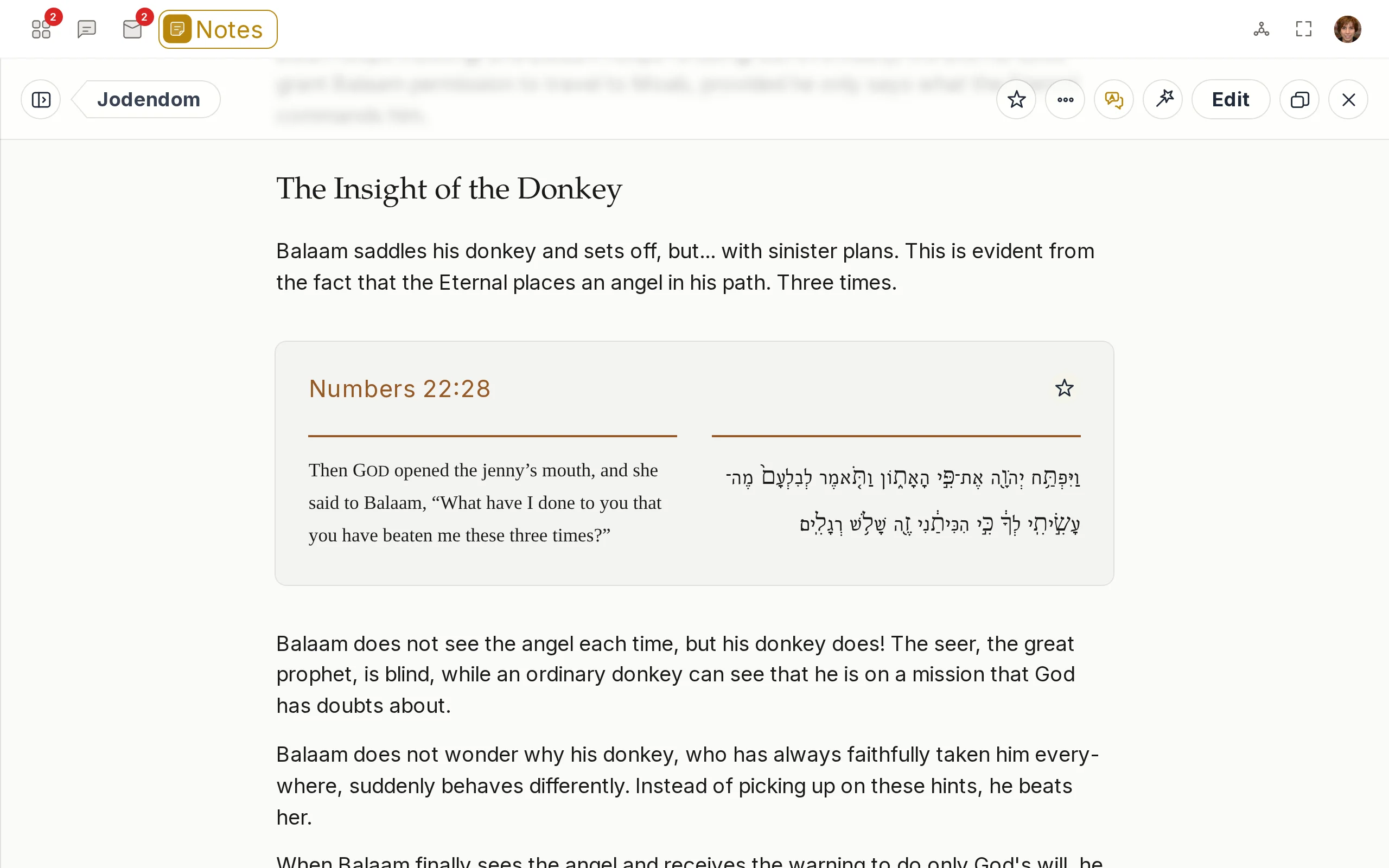
Writing happens in your own space, where an unfinished thought is nobody else's business. When the piece is done, send it from your personal drive to the hub's Library — or to the Newsletter — and the whole kehillah can read it.
The Yahrzeit app
Members register the Hebrew-date anniversary of a loved one's passing once. Yahrzeit handles the annual recurrence, sends timely reminders, and posts upcoming yahrzeits to a shared community board so others can join in observance.
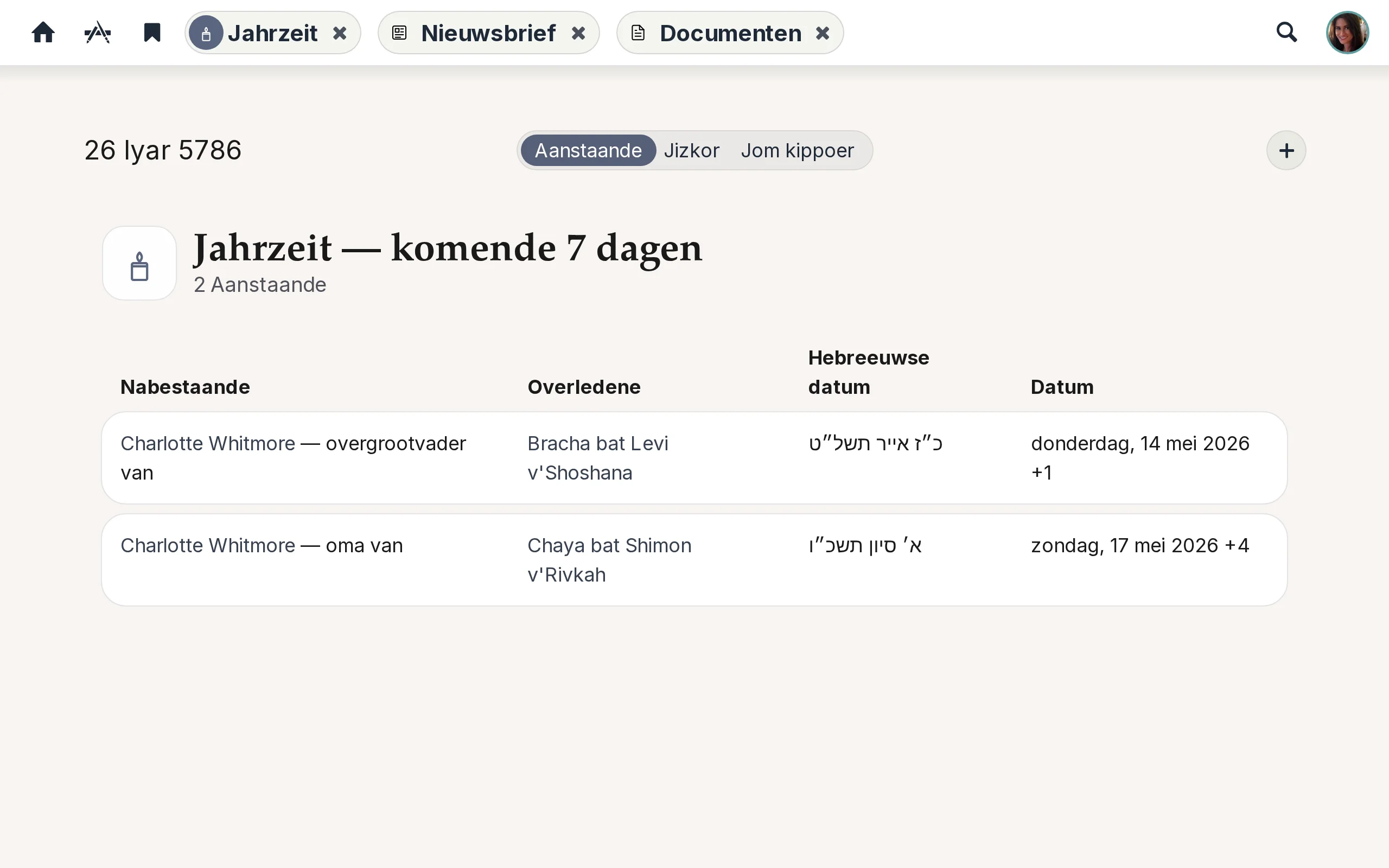
The Zmanim portlet
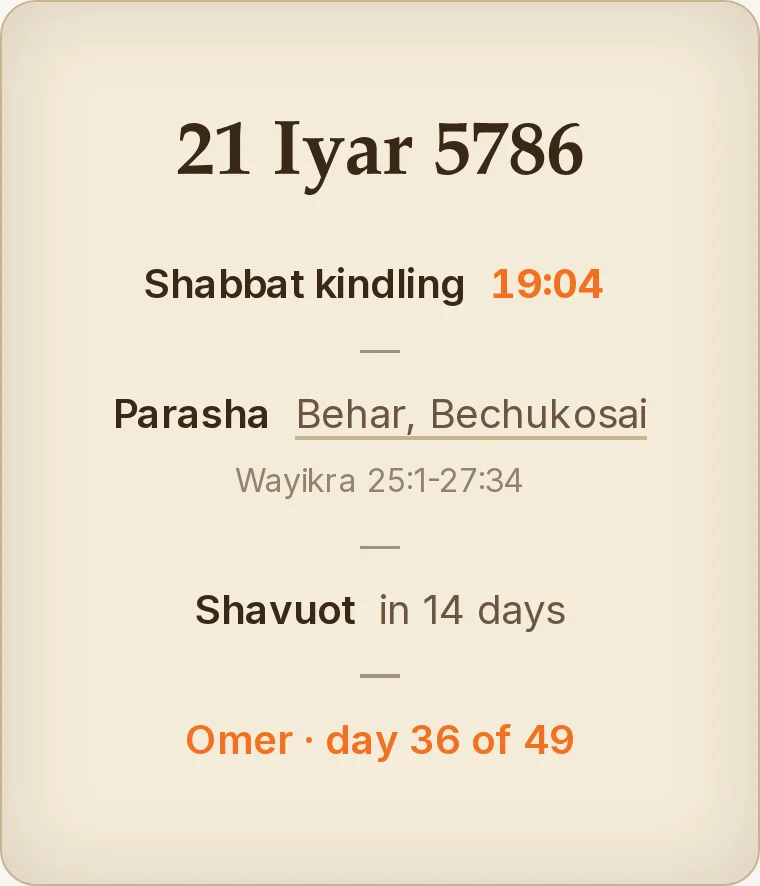
A glance at what matters today: the Hebrew date, the weekly parashah, this week's Shabbat candle-lighting time, a countdown to the next festival, and — during Sefirat HaOmer — the day count.
A community Newsletter — with a free public site
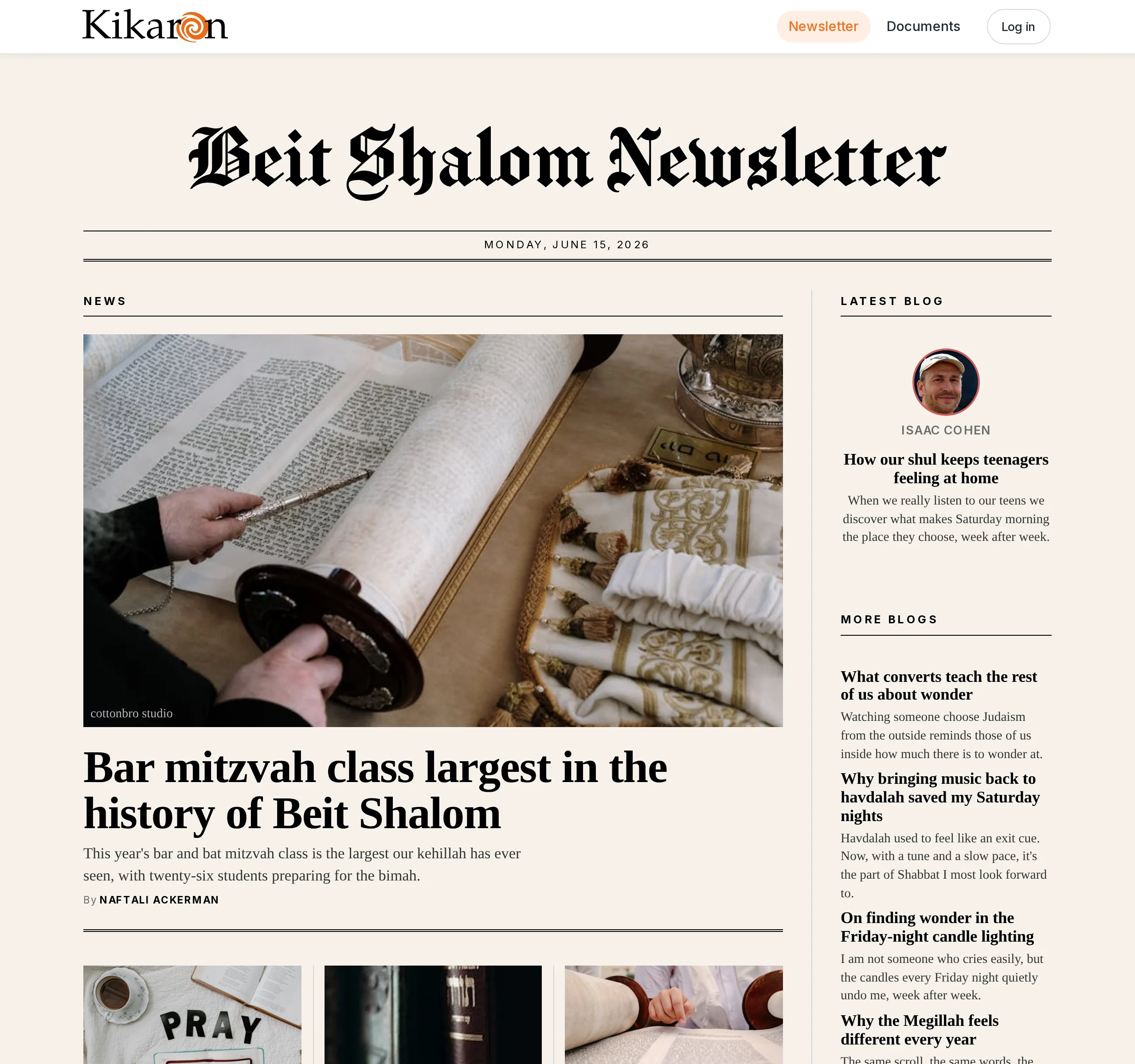
D'var Torah, simcha announcements, member essays, weekly news from the kehillah — gathered into a self-laying-out newspaper.
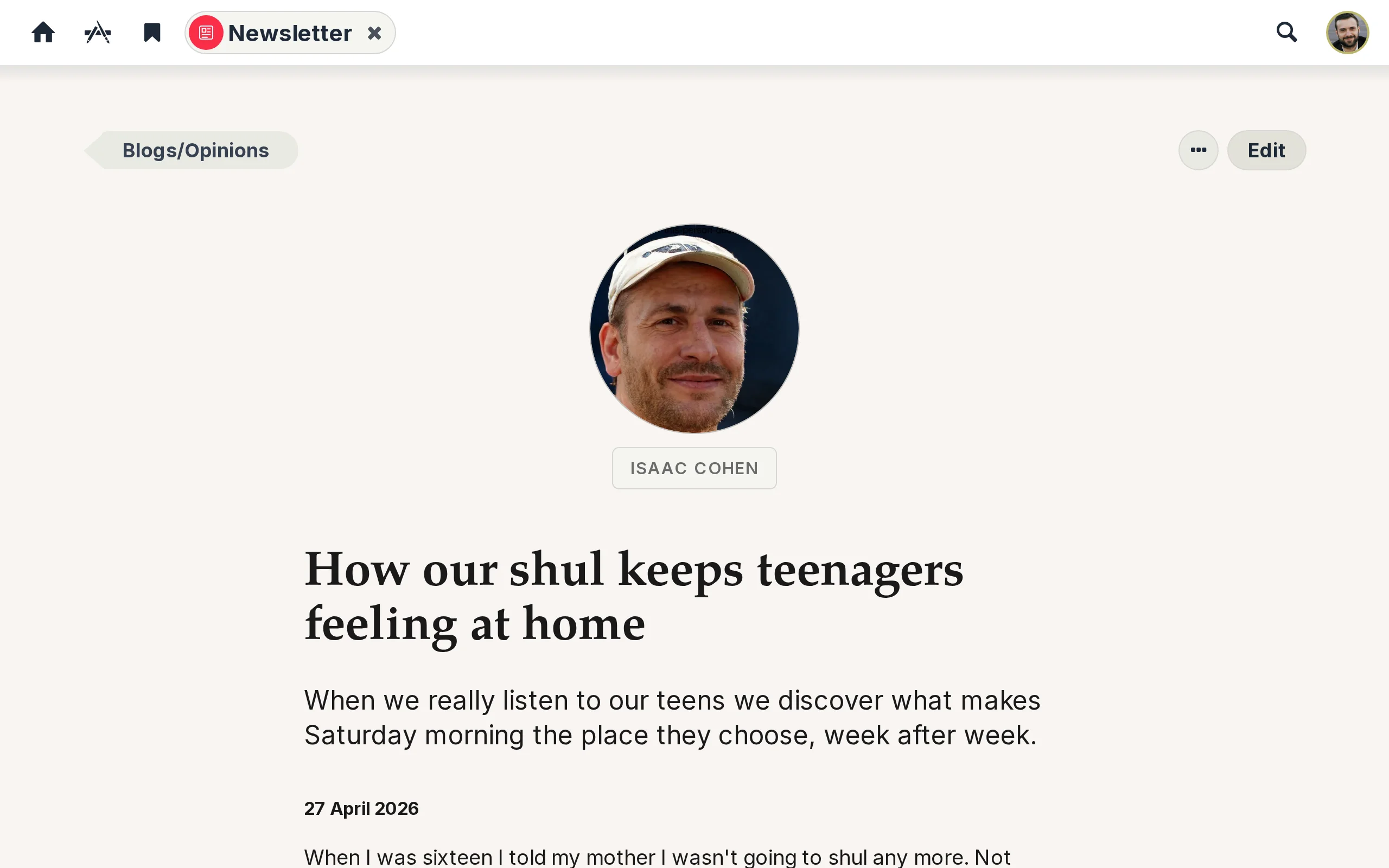
Articles marked Public also appear on a free public Newsletter site at the kehillah's own URL — for what you want non-members to read.
A mailbox for the kehillah, and one for every committee
The community gets an address of its own — beit-shalom@kikaron.com — and every team space mints one the moment it is created: building-grounds@, chevra-kadisha@, membership-committee@. Mail sent there lands in front of everyone on that committee instead of in one person's inbox, where it waits for them to come back from holiday.
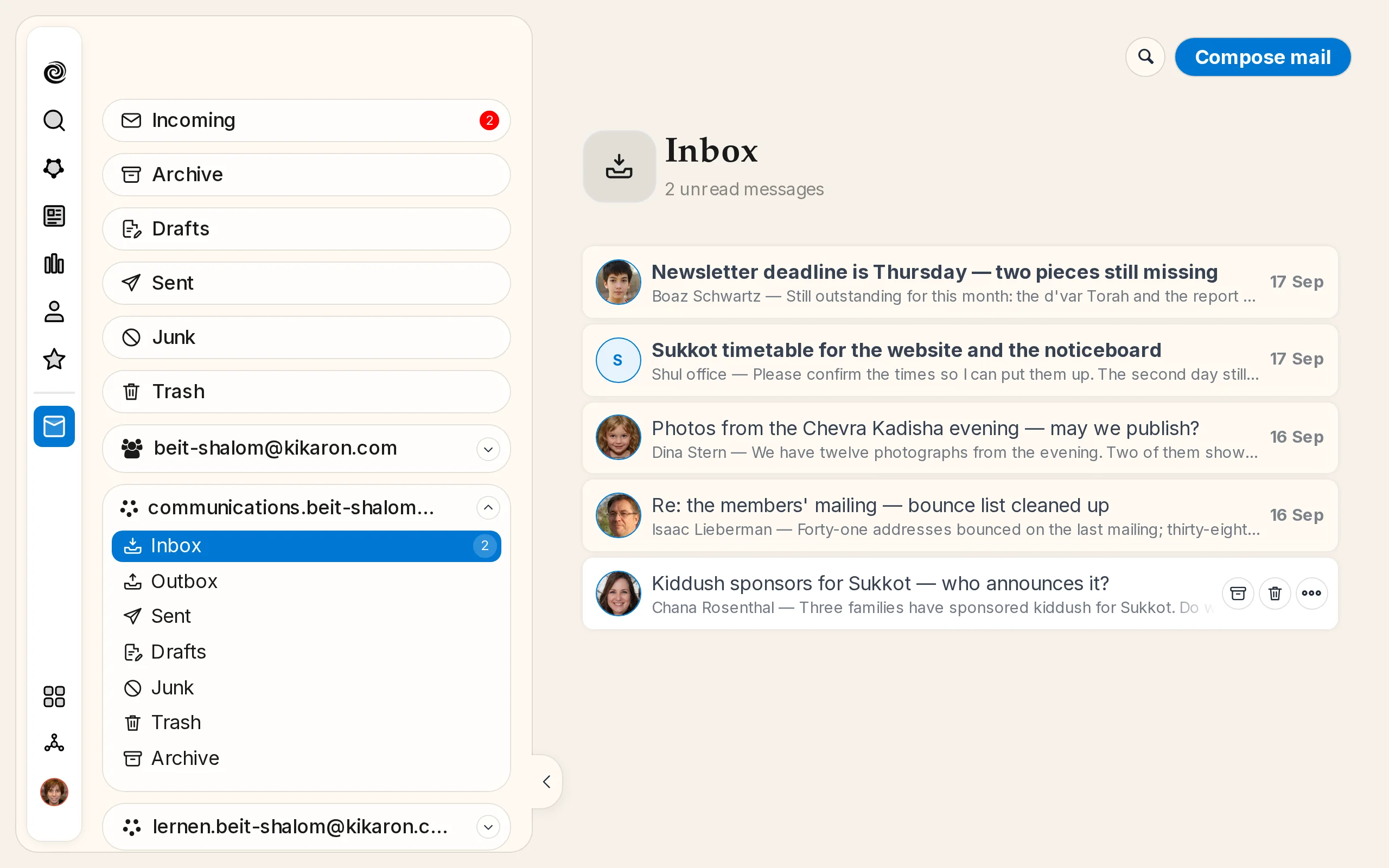
That is also what makes a handover bearable. Add someone to the committee and its mailbox opens for them; take them off and it closes. Nobody forwards a password, and nothing has to be remembered on the day a gabbai steps down.
One room for the whole kehillah, and one per committee
Every member is in the General room from the day they join, whether or not they sit on anything. Every team space brings its own room with it, with the same membership — no invitation lists to keep in step, and end-to-end encrypted like the rest.
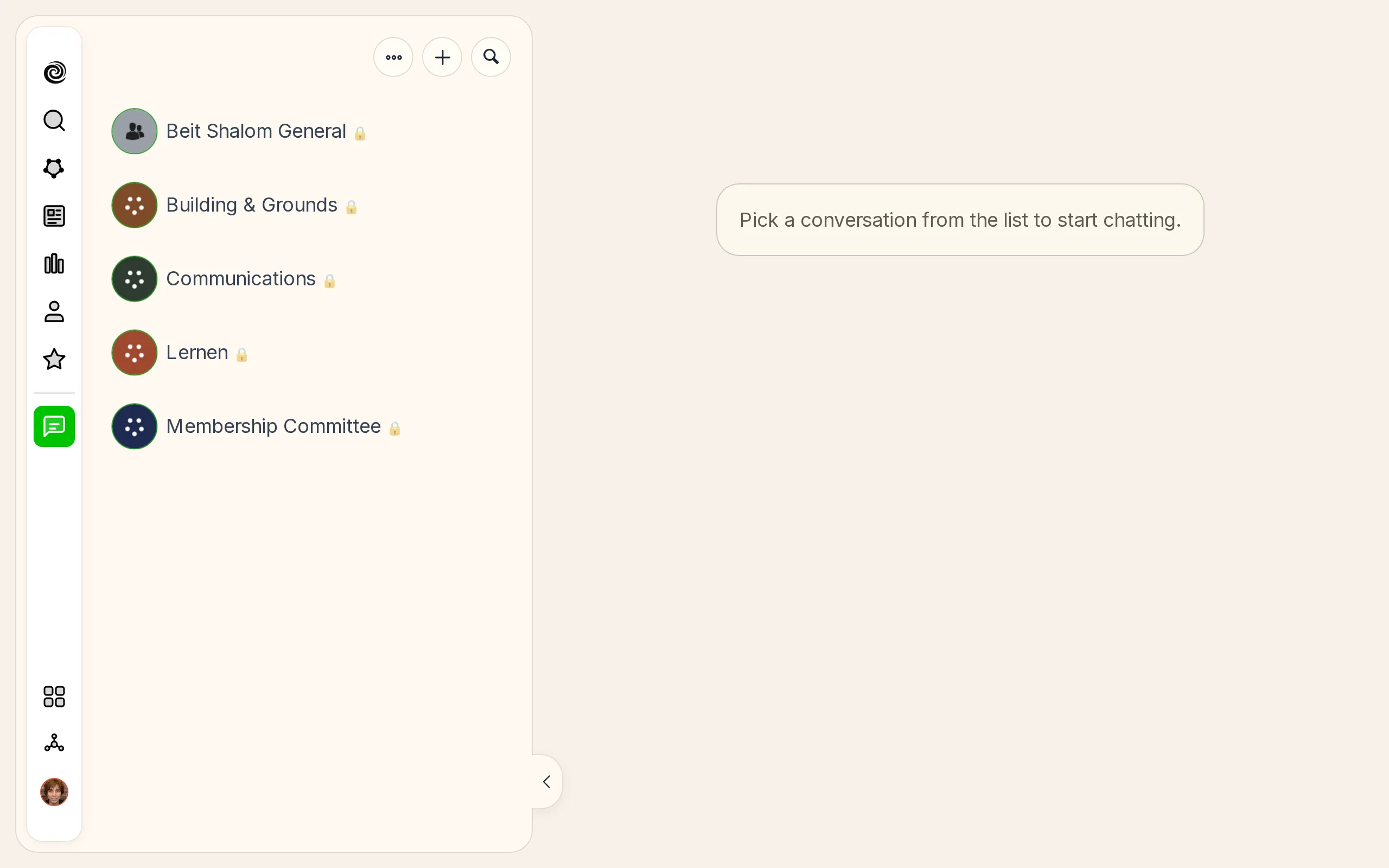
And in your own free Kikaron One account you can connect WhatsApp and Signal, so the groups the community already lives in arrive in the same app, beside the shul's own rooms — one place to look instead of four.